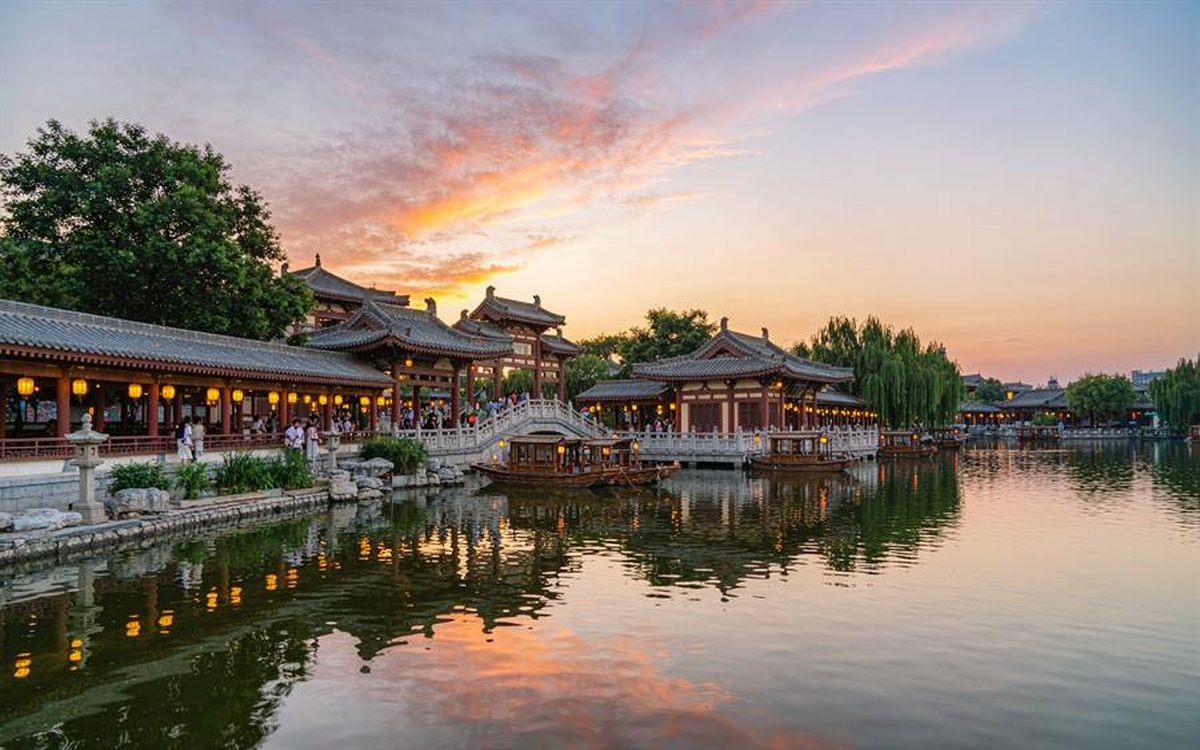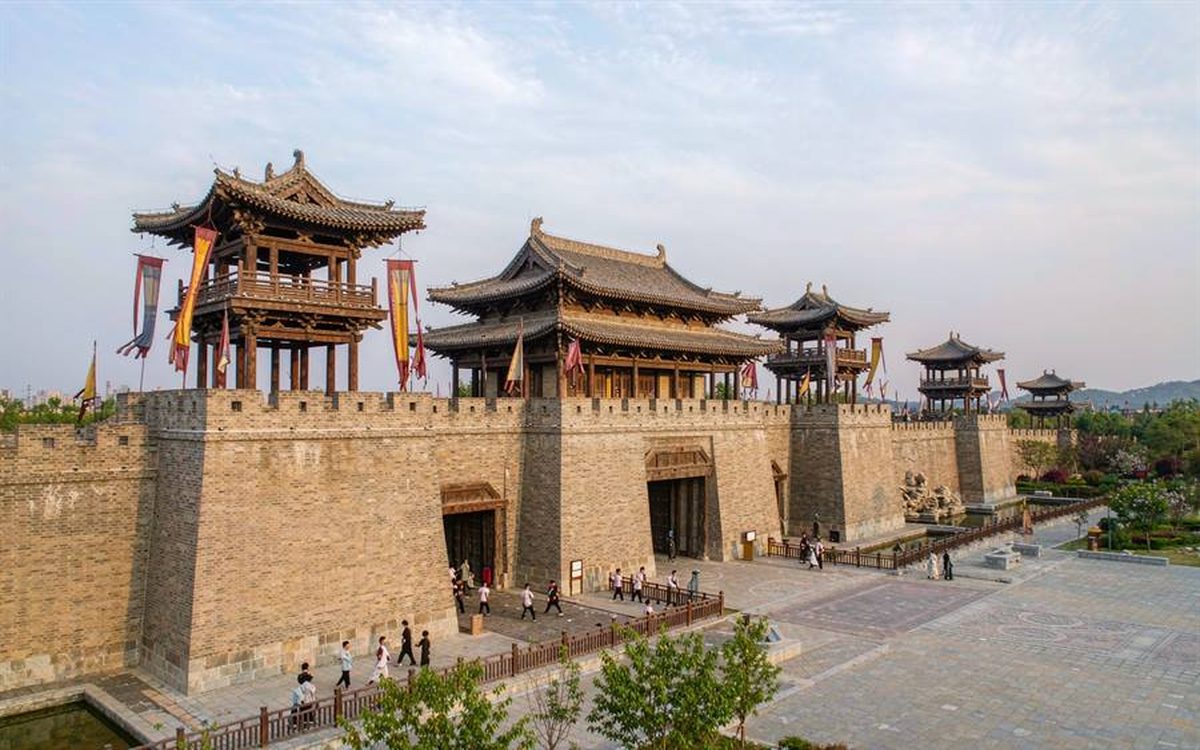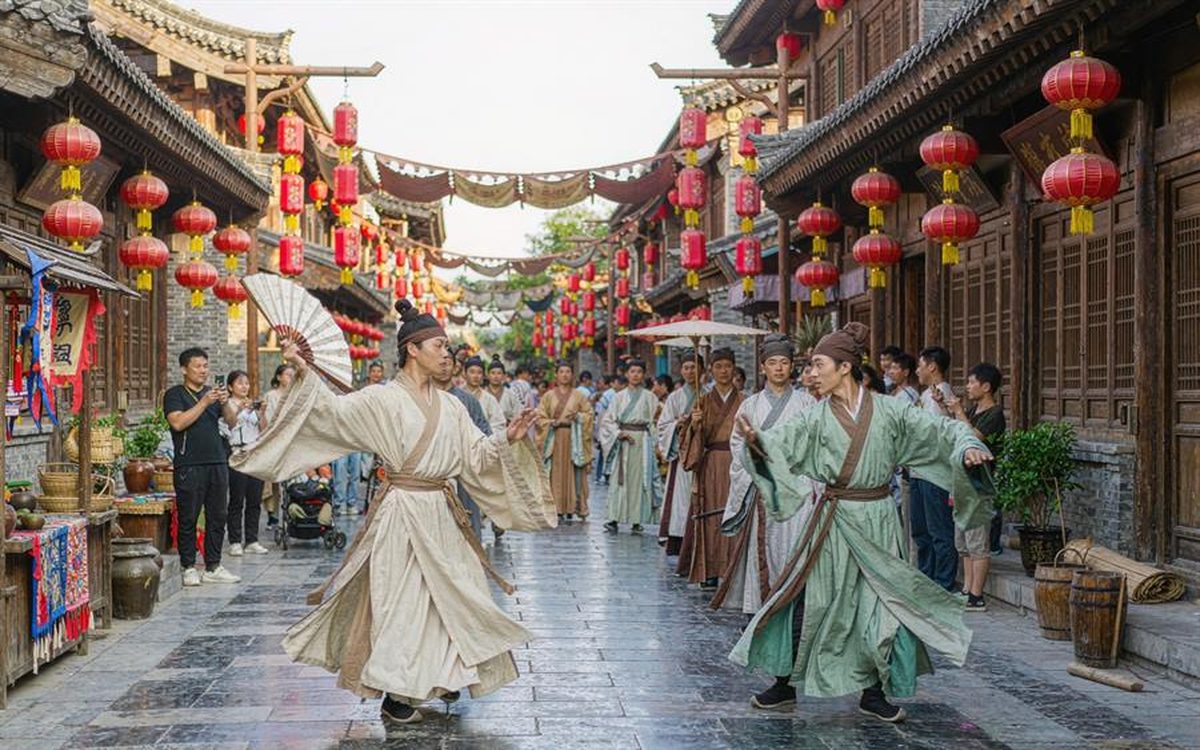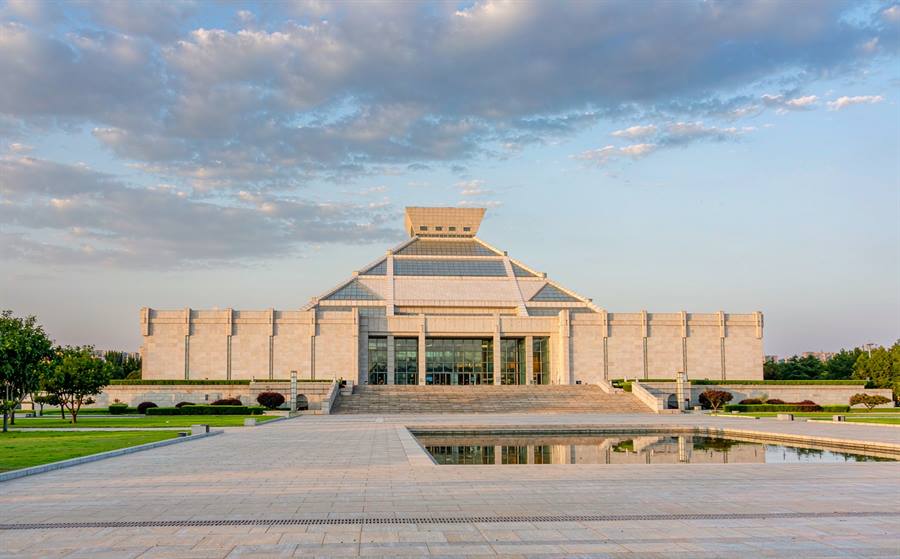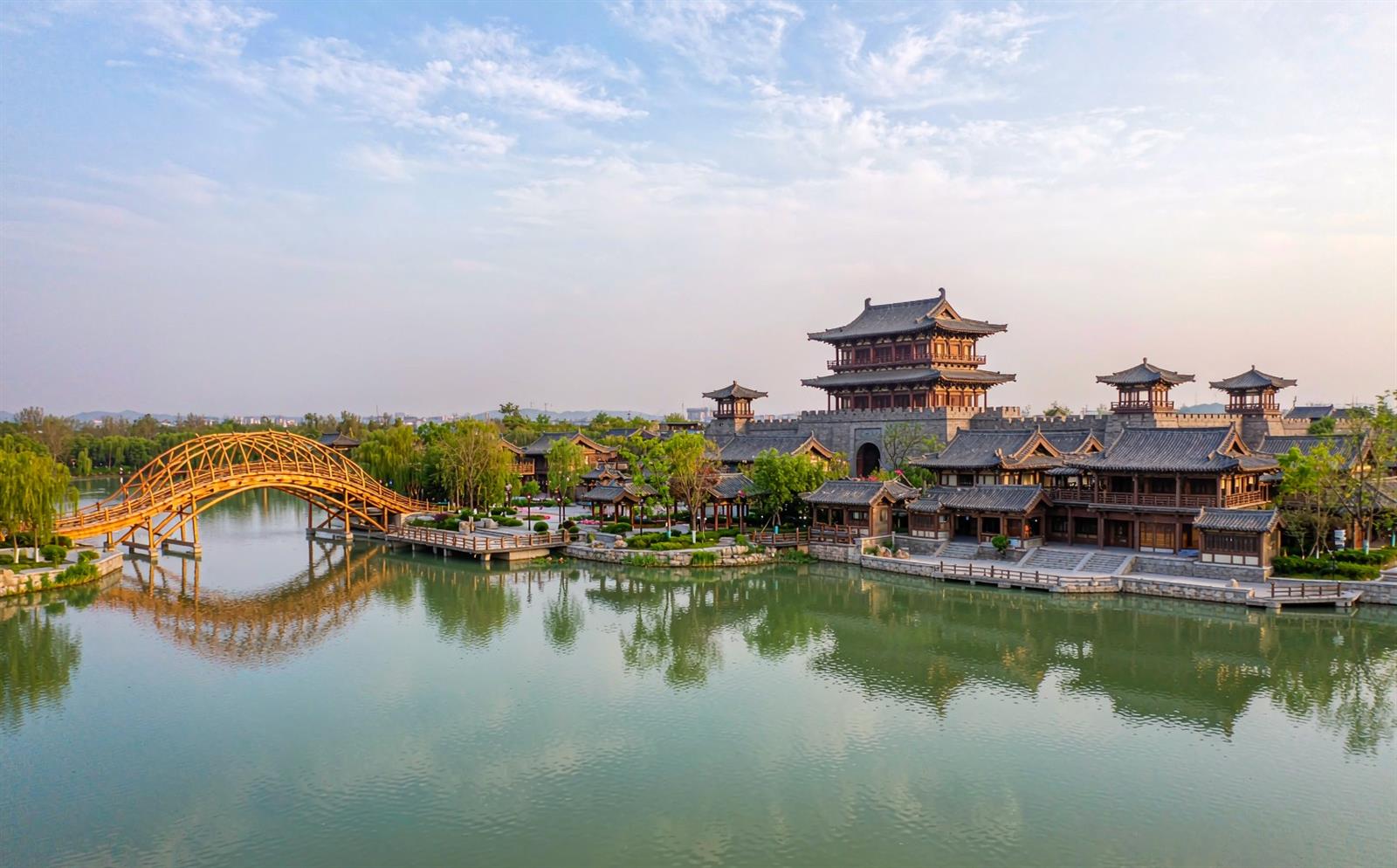
Song-dynasty Kaifeng survives in three forms: the Iron Pagoda (1049, glazed brick, climbable), a 600m fragment of the city wall, and the stratigraphy under the lake where seven earlier cities are stacked. Everything else — the Song streets, the night market facades — is a modern reconstruction. An honest half day is the pagoda, the wall, the small museum under the lake, then the food street after dark.
Kaifeng was the largest city in the world in the 11th century and almost nothing of it stands. The Yellow River did the damage, repeatedly, and the modern city sits on top of the debris. What survives is vertical: the Iron Pagoda, the Fan Pagoda, fragments of the city wall, and the stratigraphy itself.
The Iron Pagoda is the honest starting point — 55 metres of glazed brick from 1049, still original, still on its original site. From there the ruin-stack museum explains the rest: seven cities, one above another, visible through a glass floor.
Treat the reconstructed parks as interpretation rather than evidence. They are useful for imagining daily life; they are not evidence of it.
- Iron Pagoda (1049) is original
- Ruin-stack site shows seven buried cities
- Reconstructions are interpretation, not remains
- One day covers both
The running order we actually use. Times include the driving, because that is what makes or breaks the day.
- 08:30Iron Pagoda. Northern Song original, glazed brick, and best before the heat.
- 10:00Daxiangguo Temple — the monastery that ran the city's finance in the Song.
- 11:30Shanshan-Gan Guild Hall. Wood carving that most visitors walk past.
- 12:30Soup dumplings, sitting down, with vinegar.
- 14:00Kaifeng Prefecture or Lord Bao's shrine — one, depending on whether you have children.
- 16:00City wall fragment, then the drum tower at dusk.
- Iron Pagoda built
- 1049, Northern Song
- Height
- 55.88m, 13 storeys
- Wall fragment
- About 600m, walkable
- Buried cities
- Seven, stacked under the modern city
- Time needed
- Half day plus evening
- Museum entry
- Free, closed Mondays
What is included
- Guide who separates real from rebuilt
- Iron Pagoda entry and climb
- City wall walk
- Lake museum and night market route
What is not
- Song street performance tickets
- Dinner (we order, you pay)
- Gratuities